
Introduction
In today’s fast-paced and high-cost environment, financial wellness has become an important aspect of everyday life. It reflects more than simply having savings in the bank. Instead, it involves maintaining balance, control, and confidence in the way individuals earn, spend, and manage their financial obligations.
Financial wellness refers to the ability to manage daily expenses responsibly, meet financial commitments without ongoing strain, and plan with a sense of stability. This includes having a clear understanding of budgeting, maintaining awareness of spending patterns, and developing practical approaches to managing financial responsibilities over time.
Financial well-being also plays a role beyond numbers and bank balances. When individuals have a stable financial foundation, they often experience greater peace of mind and confidence in making life decisions. On the other hand, financial pressure can create stress that affects both personal well-being and family relationships.
Achieving financial stability does not mean avoiding borrowing entirely. In many situations, credit can serve a practical purpose when used thoughtfully. Understanding how borrowing works, evaluating repayment responsibilities carefully, and using credit as a structured financial tool can support long-term financial wellness when approached responsibly.
Borrowing becomes more sustainable when it is aligned with clear financial goals, such as managing urgent expenses, supporting education, or maintaining essential household needs. When individuals understand the role that credit plays within their broader financial plan, they are better able to maintain balance and stability over time.
Key Takeaways
- Financial stability is built through consistent habits such as budgeting, mindful spending, and planning for future commitments rather than relying on short-term decisions.
- Understanding the purpose of borrowing and assessing repayment capacity carefully can help individuals use credit as a practical tool rather than a source of long-term stress.
- Emotional awareness plays an important role in money decisions. Recognising triggers such as stress or impulse spending helps individuals make more thoughtful and sustainable choices.
- Access to transparent guidance and regulated lending practices allows borrowers to make informed decisions and manage financial obligations with greater confidence.
The Building Blocks of Financial Wellness

Developing Healthy Money Management Habits
Money as Behaviour Rather Than a Formula
For many people, financial wellness begins with recognising that money decisions are often driven by behaviour rather than strict financial formulas. Spending patterns are shaped by habits, emotions, and daily routines. Some individuals may spend impulsively during moments of stress, while others delay purchases to maintain control over their finances. Understanding these behavioural patterns helps people identify the triggers that influence their financial choices and build healthier relationships with money.
Developing stronger financial habits involves observing how everyday decisions affect overall financial stability. When individuals recognise the difference between necessary spending and emotional spending, they become more aware of the behaviours that influence their financial outcomes. This awareness creates a strong foundation for long-term financial stability, as it encourages more intentional choices rather than automatic reactions.
Creating Structure Through Self-Awareness
Maintaining visibility over personal finances is one of the most practical ways individuals can support financial wellness. Simple tools such as budgeting apps, expense trackers, or personal finance platforms can help individuals monitor their cash flow and identify spending trends over time. In Singapore, commonly used tools like Seedly provide accessible ways to track daily expenses and review monthly spending patterns.
Regular reflection also plays an important role in building awareness. Asking simple questions at the end of each week, such as whether spending decisions were driven by habit or genuine necessity, encourages mindful evaluation. This practice helps individuals gradually replace automatic spending with intentional choices, strengthening financial literacy and improving confidence in financial decision-making.
In addition to tracking spending, setting practical financial goals can help individuals maintain direction and motivation. Goals such as building a small emergency reserve, reducing unnecessary expenses, or preparing for upcoming obligations create a clearer sense of purpose in financial planning.
Building Consistency Rather Than Perfection
Achieving financial wellness rarely depends on strict financial discipline alone. Instead, progress often comes from small, consistent actions repeated over time. Simple routines such as scheduling automatic transfers into savings accounts or setting personal limits on discretionary spending during the week can help individuals maintain financial balance without creating unnecessary pressure.
These small actions encourage stability because they gradually build sustainable financial routines. Over time, such routines reduce the likelihood of financial stress and make it easier for individuals to maintain control over their finances even when unexpected expenses arise.
Developing an emergency buffer, even in small amounts, can also strengthen financial resilience. When unexpected costs such as medical needs or urgent repairs occur, having a modest reserve may reduce the need for reactive financial decisions.
Balance and Sustainability
Healthy financial habits should allow room for enjoyment and personal priorities. Financial discipline does not require eliminating all discretionary spending. Instead, it involves aligning financial decisions with personal values and long-term goals. When spending choices reflect genuine needs and priorities rather than external pressures or social comparisons, individuals are more likely to experience lasting financial wellness.
Managing Debt as Part of Financial Wellness
Debt as a Neutral Financial Tool
Debt is often viewed negatively, but in reality, it can function as a practical financial tool when used responsibly. Loans can help individuals manage temporary financial gaps, support education, or fund necessary home improvements. When borrowing decisions are guided by careful planning and repayment capacity, they can contribute to long-term financial wellness rather than undermine it.
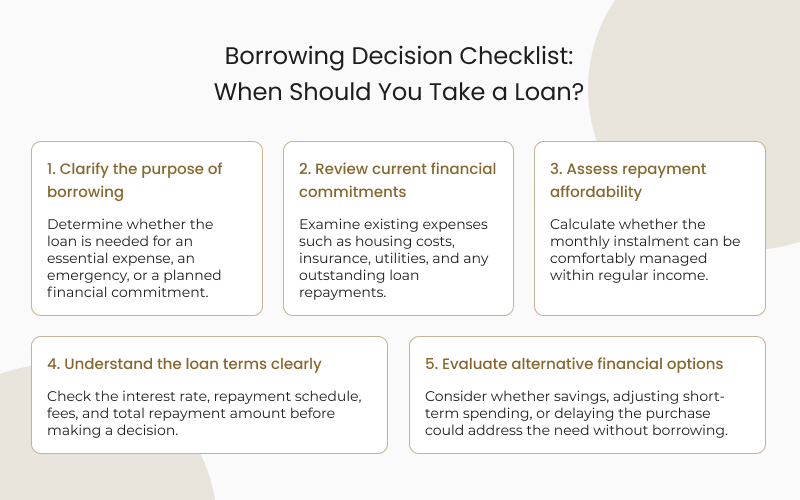
Responsible borrowing involves evaluating whether a loan supports a meaningful need and whether repayments can be managed comfortably within existing financial commitments, including how repayments fit within income through a healthy debt-to-income ratio. This perspective reflects the principle that credit should be used thoughtfully as part of a broader financial plan.
Understanding the long-term impact of borrowing is equally important. Before taking on any loan, individuals benefit from reviewing their current financial obligations and considering how new repayments will fit within their monthly commitments.
Awareness Before Taking a Loan
Before committing to any form of credit, individuals benefit from reflecting on the purpose behind the loan. Borrowing may be appropriate in situations such as medical emergencies, urgent repairs, or temporary cash flow disruptions. In other cases, loans may be used for discretionary spending that can wait until sufficient savings are available.
A practical guideline often recommended in Singapore is ensuring that loan repayments remain manageable within monthly income. When borrowing decisions are aligned with repayment capacity and realistic financial planning, individuals are better positioned to maintain long-term financial stability without creating unnecessary financial strain.
Recognising Emotional Triggers Behind Debt
Borrowing decisions are not always purely rational. Emotional factors such as stress, social comparison, or the desire for short-term comfort can influence financial choices. Recognising these triggers allows individuals to pause and reconsider whether borrowing is truly necessary. This awareness encourages more thoughtful financial habits by transforming reactive financial decisions into more deliberate ones.
Developing this awareness helps individuals avoid unnecessary financial commitments while strengthening their confidence in making informed financial choices.
Simplifying Financial Commitments
For individuals managing several loans simultaneously, repayment schedules can become complicated to track. In such situations, restructuring repayments into a single plan may help simplify financial obligations. Some borrowers explore options such as a debt consolidation loan by a money lender arrangement to combine multiple payments into one structured repayment plan.
Others may consider a consolidated loan solution in Singapore to reduce administrative complexity and improve repayment visibility. When structured properly, consolidation can also support borrowers who need payday loan help, particularly when short-term loans accumulate and become harder to manage individually.
A simplified repayment structure provides greater clarity because borrowers can focus on a single schedule rather than multiple overlapping commitments. This clearer approach allows individuals to rebuild financial control with greater confidence.
From Repayment to Financial Recovery
Paying down debt should be viewed as progress rather than punishment. Each completed repayment strengthens financial stability and reinforces positive financial behaviour. Over time, consistent repayment builds confidence and contributes to long-term financial wellness, helping individuals regain control over their finances while reducing financial anxiety, and also supporting rebuilding credit after loan repayment as part of continued financial recovery.
The Emotional and Educational Dimensions of Financial Wellness
Understanding the Emotional Relationship with Money
Financial decisions are often closely connected to emotions. Feelings such as stress, pride, guilt, or fear can influence how individuals save, spend, or borrow. Recognising these emotional influences is an important step toward achieving financial wellness because it allows individuals to shift from reactive financial behaviour to more mindful decision-making.
When people become more aware of the emotional factors behind their financial choices, they are better equipped to approach money with clarity and confidence rather than avoidance or impulsiveness.
This awareness also encourages individuals to pause before making significant financial commitments, allowing them to evaluate whether a decision supports their long-term financial priorities.
Strengthening Financial Knowledge and Confidence
Education also plays a key role in building long-term financial stability. Understanding how interest rates work, how loan repayment structures are calculated, and how budgeting systems function helps individuals make more informed financial choices. This knowledge strengthens financial empowerment, allowing individuals to navigate financial options with greater confidence.
Access to reliable information also helps borrowers evaluate different financial solutions more carefully. For example, when exploring credit options, individuals may compare lenders, repayment terms, and regulatory protections. In Singapore, licensed moneylenders regulated by the Ministry of Law, including those offering online services, provide structured borrowing frameworks that comply with local regulations.
Learning Financial Values Across Generations
Financial attitudes often develop through early experiences. Families that openly discuss budgeting, saving, and responsible financial decision-making help younger generations understand money as a practical tool rather than a sensitive or confusing topic. Early exposure to financial discussions encourages healthier financial behaviour later in life and supports long-term financial wellness.
Parents who involve children in simple financial activities, such as planning household expenses or setting savings goals, also help reinforce the importance of discipline and planning, including preparing for unforeseen expenses and managing them responsibly when they arise.
A Broader Culture of Financial Awareness
Across Singapore, greater access to financial education and digital financial tools has made money management more accessible. Public education efforts, budgeting platforms, and community financial programmes have encouraged individuals from different income levels to take a more active role in managing their finances.
This growing emphasis on education highlights an important point. Financial stability does not depend solely on income level. Instead, financial wellness often develops through awareness, consistent habits, and the willingness to learn practical financial skills that support long-term stability.
Applying Financial Wellness to Borrowing Decisions
Turning Awareness into Action
Identifying Unhelpful Patterns
Understanding personal spending and borrowing habits is an important step in protecting long-term financial wellness. Some borrowers may gradually fall into patterns of credit dependence without noticing the change. Common warning signs include relying on several credit cards for non-essential purchases, missing repayment deadlines, or taking new loans to maintain a lifestyle rather than addressing genuine financial needs. Recognising these patterns early allows individuals to pause and reassess their financial direction before the situation becomes more difficult to manage.
Steps to Re-Establish Control
Regaining control over personal finances often begins with gaining full visibility over existing obligations. This includes tracking all expenses carefully, from daily spending to fixed commitments such as insurance premiums and loan repayments. When individuals clearly understand where their money is going each month, they can make more informed decisions about spending priorities.
Setting savings goals before allocating money for discretionary expenses can also encourage better financial discipline. Some people find it helpful to apply simple strategies, such as a twenty-four-hour pause before making non-essential purchases. This brief delay allows emotions to settle and reduces the likelihood of impulsive spending.
Reviewing budgets periodically also helps ensure that financial plans remain realistic as income levels or household needs change. This habit helps individuals maintain financial balance even during periods of uncertainty.
Debt Management for Stability
Borrowers who are managing several loans at the same time may benefit from restructuring their repayment approach. When payments are scattered across different lenders and schedules, financial planning can become difficult. A structured consolidation arrangement can help simplify repayments by combining obligations into a clearer and more manageable plan. This approach reduces administrative complexity and allows borrowers to focus on rebuilding stability rather than managing multiple deadlines, which also supports rebuilding credit after loan repayment over time.
Behavioural Reinforcement
Progress toward financial stability is often built through small but consistent achievements. Paying off a single loan, reducing a credit balance, or reaching a savings milestone can strengthen motivation and reinforce positive habits. Recognising these milestones encourages individuals to continue making thoughtful financial decisions that support long-term financial stability.
How 101 Credit Pte Ltd Promotes Financial Wellness Beyond Lending
Ethical and Transparent Lending Practices
Operating within Singapore’s regulated lending environment, 101 Credit Pte Ltd provides services as a licensed moneylender. This means the company follows the regulatory framework established by the Ministry of Law, which sets clear guidelines on interest rates, fees, and borrower protection. Transparency plays a central role in the lending process, as borrowers receive clear explanations of loan terms before any agreement is finalised.
Guidance and Education for Borrowers
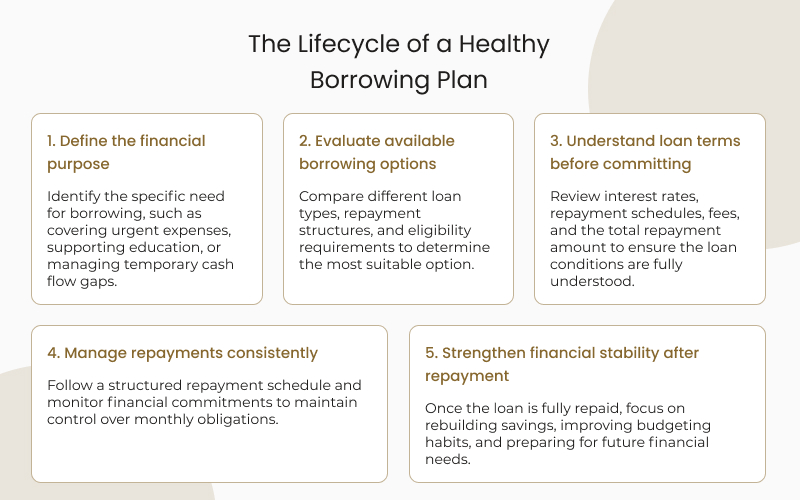
At 101 Credit Pte Ltd, the lending process is designed to support informed decision-making. Loan discussions typically include detailed explanations of repayment schedules, total borrowing costs, and realistic assessments of affordability.
By taking time to explain these details clearly, borrowers are able to understand how a loan fits within their existing financial responsibilities before committing to an agreement.
This approach helps individuals make borrowing decisions with greater confidence and clarity.
Support for Debt Consolidation and Financial Recovery
Some borrowers approach lenders while managing several existing financial obligations. In these situations, 101 Credit Pte Ltd may assist clients in exploring structured repayment arrangements that help simplify multiple debts into a clearer plan. By reducing the complexity of managing several loans simultaneously, borrowers can gradually regain control over their finances and focus on rebuilding stability.
Accessibility Through Safe Digital Platforms
Modern financial services increasingly rely on digital platforms for convenience and accessibility. 101 Credit Pte Ltd offers secure channels for loan applications and enquiries, allowing individuals to seek guidance or submit applications without unnecessary delays. This accessibility is particularly helpful for borrowers who need timely financial solutions while maintaining privacy and control over their decisions.
Commitment to Long-Term Well-Being
Beyond providing loans, 101 Credit Pte Ltd emphasises the importance of thoughtful financial planning. By encouraging borrowers to consider repayment capacity, understand loan structures, and make informed financial decisions, the company supports individuals in building stronger financial confidence over time.
Questions You Might Ask
-
How does borrowing fit into financial planning?
Borrowing can support financial stability when approached thoughtfully. Taking a loan for meaningful purposes such as education, home improvement, or managing temporary financial gaps can be helpful if repayment responsibilities are clearly understood and planned for in advance. This involves evaluating both the purpose of the loan and the ability to repay it comfortably.
-
What makes borrowing from 101 Credit different?
101 Credit focuses on clear communication and transparency throughout the lending process. Applicants are guided through the loan terms so they understand repayment schedules, costs, and responsibilities before making a decision. This approach helps borrowers make informed choices that align with their financial situation.
-
How can I tell if I am borrowing too much?
A commonly used guideline is to ensure that total monthly debt repayments remain manageable relative to income. If repayments begin to take up a large portion of monthly earnings, it may be helpful to review spending commitments and consider adjusting financial plans to maintain balance.
-
Can 101 Credit help me manage existing debt?
Yes. 101 Credit may assist borrowers who are managing several financial obligations by exploring structured repayment arrangements. These options can help organise repayments more clearly and reduce the stress of managing multiple payment schedules.
-
Is online lending safe?
Online lending can be safe when borrowers work with licensed lenders that follow Singapore’s regulatory framework. Choosing a lender that operates under official regulations helps ensure that loan terms are transparent and that borrower protections are in place. 101 Credit provides secure digital channels that allow individuals to submit enquiries or applications conveniently.
Conclusion

Achieving financial wellness is a gradual process that develops through awareness, consistent discipline, and thoughtful decision-making. It requires individuals to understand their financial habits, plan their commitments carefully, and approach borrowing with clarity and responsibility.
When credit is used with a clear purpose and a realistic repayment plan, it can support meaningful progress rather than create long-term financial strain.
At 101 Credit Pte Ltd, the lending approach is centred on transparency and informed decision-making. Borrowers are guided through their options with clear explanations of loan terms and repayment structures, allowing them to understand their responsibilities before committing.
This focus on clarity supports individuals in making financial decisions that are practical, manageable, and aligned with their long-term financial plans.
Maintaining financial wellness also involves balancing present needs with future goals. By developing healthy financial habits and working with reliable financial partners, individuals can navigate temporary financial challenges while building greater stability over time.
Discover how 101 Credit Pte Ltd can support your next financial step with transparent guidance and responsible lending solutions designed to help you move forward with greater confidence.