
Introduction
Singaporeans are often regarded as financially prudent, yet emotional or lifestyle spending remains part of modern financial behaviour, particularly among younger adults who are balancing aspirations, rising living costs, and long-term financial stability. In a highly urbanised and opportunity-driven society, the way individuals approach everyday spending and saving is shaped by both practical needs and personal goals.
In simple terms, money habits refer to the combination of daily financial choices, emotional influences, and attitudes toward saving, spending, and managing debt. These patterns develop gradually through personal experiences, cultural influences, and financial responsibilities that evolve throughout adulthood.
Within Singapore’s high-cost, fast-paced environment, everyday financial decisions often shape how individuals manage credit cards, personal loans, and major life expenses such as housing, education, and family commitments. Small routine decisions can accumulate over time and influence whether borrowing becomes a planned financial tool or a reactive solution during periods of financial pressure.
This article explores the psychological and behavioural patterns behind everyday financial decisions, offering insight into why people borrow and how awareness of these patterns can support more thoughtful financial choices. Developing good financial discipline does not necessarily mean avoiding credit entirely. Rather, it involves recognising when borrowing may be appropriate and approaching it with clarity, planning, and responsibility.
Key Takeaways
- Financial decisions are often influenced by emotions, social expectations, and personal experiences, making awareness an important step toward making more balanced choices.
- Early financial education and open discussions about budgeting and savings help individuals develop responsible financial behaviour later in life.
- Borrowing can support important needs or goals when approached with a clear purpose, careful planning, and a full understanding of repayment commitments.
- Consistently tracking expenses, setting savings targets, and reviewing financial commitments can strengthen long-term financial stability.
The Psychology Behind Spending and Borrowing

How Emotions Influence Our Financial Choices
Emotions play a powerful role in shaping everyday financial decisions. Even when individuals intend to manage their finances carefully, stress, social pressure, and excitement can influence spending patterns. Over time, these emotional responses gradually form money habits that affect how people approach saving, spending, and borrowing.
Stress is one of the most common emotional triggers behind spending. During periods of fatigue or personal pressure, some individuals seek comfort through purchases or quick access to funds. In such moments, borrowing options in Singapore, such as payday loans, may seem appealing for immediate relief, although emotionally driven decisions can sometimes neglect longer-term financial implications.
Social comparison also influences financial behaviour in subtle ways. With constant exposure to curated lifestyles on social media, individuals may feel pressure to match the spending patterns of peers or influencers. These comparisons can quietly reshape money habits, encouraging purchases that reflect social expectations rather than genuine financial readiness.
Another emotional driver is the fear of missing out. Promotional campaigns, festive discounts, and flash sales often create a sense of urgency that push consumers to spend quickly. Without careful reflection, these experiences can reinforce money habits where impulsive decisions gradually become part of everyday financial routines.
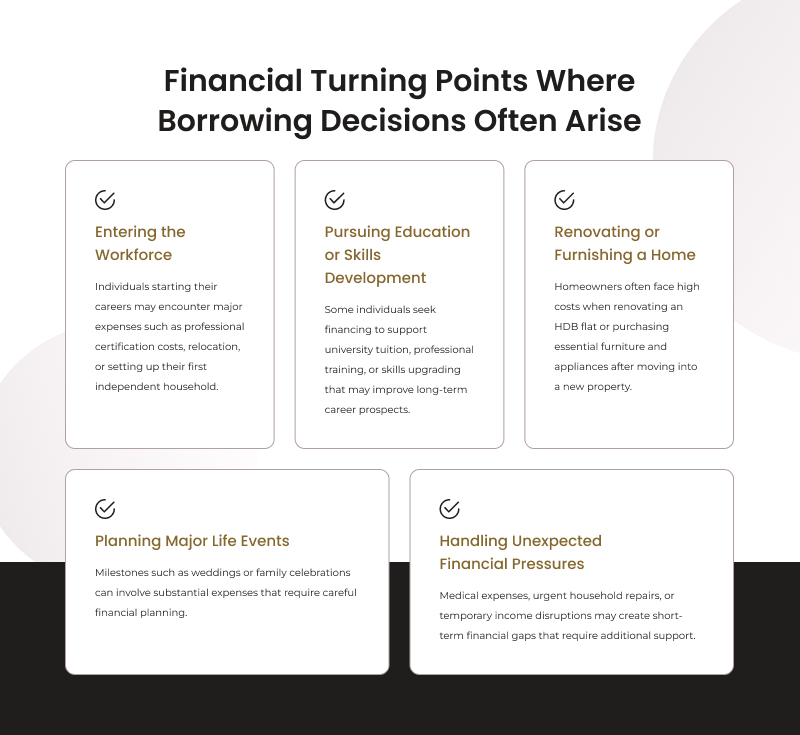
In Singapore, spending often increases during festive periods or major life milestones. Weddings, festive gatherings, home renovations, or upgrading household appliances can quickly raise financial commitments. In these situations, lifestyle expectations may begin to shape money habits more strongly than careful financial planning.
Behavioural finance research consistently shows that emotions can override rational thinking in money-related decisions. Recognising these patterns is an important step toward managing debt wisely, as individuals who become aware of emotional triggers are better positioned to pause, reflect, and make more balanced financial decisions. Without this awareness, emotional spending can slowly create financial stress. Over time, repayment obligations begin to compete with essential living costs, including housing, transportation, groceries, and other necessities.
The Role of Upbringing and Financial Education
Financial attitudes often begin forming during childhood. When children observe their parents budgeting, discussing savings goals, or planning for expenses, these experiences often help reinforce positive money habits that emphasise discipline and planning.
Conversely, when financial matters are rarely discussed at home, individuals may grow up with uncertainty or discomfort around money. Without open conversations about borrowing or debt management, some adults may avoid financial planning until difficulties arise. Over time, these patterns influence money habits that can lead to reactive borrowing rather than thoughtful preparation.
In Singapore, efforts to strengthen financial literacy have increased in recent years. Schools, community programmes, and public education initiatives increasingly encourage young people to understand savings, budgeting, and credit management. These initiatives aim to cultivate responsible financial decision-making, helping individuals develop financial awareness from an early stage. For individuals looking to build a clearer foundation, exploring practical strategies for budgeting and borrowing can provide useful direction, and readers can learn more by visiting detailed guides that explain how to plan finances effectively in Singapore.
Generational differences can also be observed in how people interact with financial tools. Younger Singaporeans often adopt digital payments, instalment plans, and online credit services comfortably, while the older generations tend to prioritise savings and avoid borrowing unless necessary. These contrasting perspectives gradually shape evolving money habits across different age groups.
The rise of digital financial tools has also changed how quickly individuals can access credit. Online applications, instalment platforms, and digital payment systems allow borrowing decisions to be made within minutes. While this convenience improves accessibility, it also means individuals need stronger financial awareness to ensure that convenience does not replace thoughtful financial planning.
Early financial education plays an important role in guiding long-term financial stability. When individuals understand budgeting, interest rates, and repayment responsibilities, they are more likely to develop money habits that emphasise planning rather than relying on urgent borrowing when unexpected expenses occur. To better understand how financial plans should adapt over time, especially during significant life events, readers can explore additional insights that explain how budgeting approaches evolve across different life stages.
The Cultural Context of Borrowing in Singapore
Cultural values also shape how borrowing is viewed within society. In Singapore, many people approach borrowing pragmatically, seeing it as a financial tool rather than a social stigma. This practical attitude influences money habits, especially when individuals consider loans for major life events or necessary expenses.
Family support systems remain an important aspect of local financial culture. It is not uncommon for relatives to assist one another during periods of financial need, whether through shared responsibilities or temporary loans. These traditions can influence money habits that prioritise collective support and long-term stability.
Lifestyle aspirations also play a visible role in financial decisions. Major purchases such as weddings, home renovations, or upgrading vehicles can be closely linked to personal goals and social image. For some individuals, these aspirations influence their borrowing mindset, particularly when balancing lifestyle expectations with financial capacity.
Local examples illustrate how borrowing may be connected to everyday milestones. Renovating an HDB flat, managing the cost of a Certificate of Entitlement for a vehicle, or planning significant travel experiences can all involve careful financial consideration. In these situations, some individuals may explore services offered by a personal loan money lender in Singapore when traditional financing options are limited. Understanding how this type of financing can support different financial needs can help individuals make more informed decisions when evaluating their options.
At the same time, responsible borrowing decisions often depend on the purpose behind the loan. Many Singaporeans seek financing for practical needs such as medical expenses, education fees, home improvements, or temporary cash flow gaps. When borrowing is tied to meaningful goals and guided by a clear repayment plan, it becomes a practical financial tool rather than a reactive response.
These cultural influences highlight a delicate balance between aspiration and prudence. While financial tools can support meaningful life goals, the way individuals approach borrowing often reflects deeper money habits shaped by culture, experience, and personal priorities.
Building Healthier Money Habits
Identifying and Changing Unhelpful Financial Patterns
A. Why Awareness Matters
Developing healthier financial behaviour begins with awareness. Many people assume that financial stability depends only on income level, but daily money habits often play a more decisive role in long-term outcomes. When individuals become conscious of their financial decisions, they are better able to recognise patterns that quietly affect their ability to save, spend, and borrow responsibly.
Unhelpful routines may seem small at first. Overspending on discretionary items, neglecting to maintain a monthly budget, or postponing debt repayments can gradually weaken financial stability. Over time, these patterns shape how individuals respond to unexpected expenses.
Recognising these patterns creates an opportunity for change. By honestly examining their financial behaviour, individuals can begin shifting toward smarter financial planning, where spending decisions are guided by long-term priorities rather than short-term convenience.
B. Recognising Unhelpful Habits
Unhelpful financial patterns can appear in subtle ways. For example, relying heavily on credit cards for non-essential purchases can slowly increase outstanding balances and create repayment pressure. When these behaviours continue unchecked, they can reinforce patterns that prioritise immediate gratification over long-term financial security.
Another common pattern involves failing to track expenses regularly. Without a clear understanding of where money goes each month, it becomes difficult to identify areas where spending can be adjusted. Over time, this lack of visibility may lead to borrowing decisions made for convenience rather than careful consideration of affordability and repayment ability.
Some individuals may also turn to borrowing for temporary relief rather than purposeful financial planning. Loans intended to cover short-term emotional spending can create ongoing financial obligations that extend beyond the original purchase.
C. Practical Steps to Build Better Habits
Improving financial behaviour does not require drastic changes. Consistent and manageable steps often lead to more sustainable results.
Step 1: Track All Expenses Consistently
Maintaining a detailed record of income and spending helps individuals understand how their financial resources are allocated. Recording loan repayments, insurance premiums, utilities, and daily purchases provides a clearer financial picture. Digital tools such as Seedly, OCBC Money Insights, or even a simple spreadsheet can support this process and encourage greater financial discipline through better visibility.
Step 2: Set Fixed Monthly Savings Goals
Savings should be treated as a regular financial commitment rather than an optional activity. Automating transfers into savings accounts ensures consistency and reduces the temptation to spend funds intended for future needs. Over time, this discipline strengthens financial resilience and readiness for unexpected events.
Step 3: Pause Before Purchasing
A simple but effective strategy is the twenty-four-hour rule. Delaying non-essential purchases for at least a day creates space for reflection and helps reduce impulse spending. This pause encourages individuals to assess whether a purchase genuinely adds value or simply satisfies a temporary desire.
Step 4: Review and Adjust Regularly
Financial situations evolve. Income levels, family responsibilities, and lifestyle priorities may change, making it important to revisit budgets periodically. Adjusting spending allocations or eliminating unused subscriptions can help maintain healthier financial patterns while reinforcing positive financial discipline.
D. Behavioural Reinforcement
Lasting improvement often comes from gradual progress rather than sudden transformation. Small, consistent actions reinforce constructive financial discipline, especially when individuals acknowledge and celebrate financial milestones such as meeting savings goals or reducing outstanding debt. Positive reinforcement strengthens motivation and encourages individuals to continue building financial discipline over time.
Borrowing Wisely: Turning Good Money Habits into Smart Financial Moves
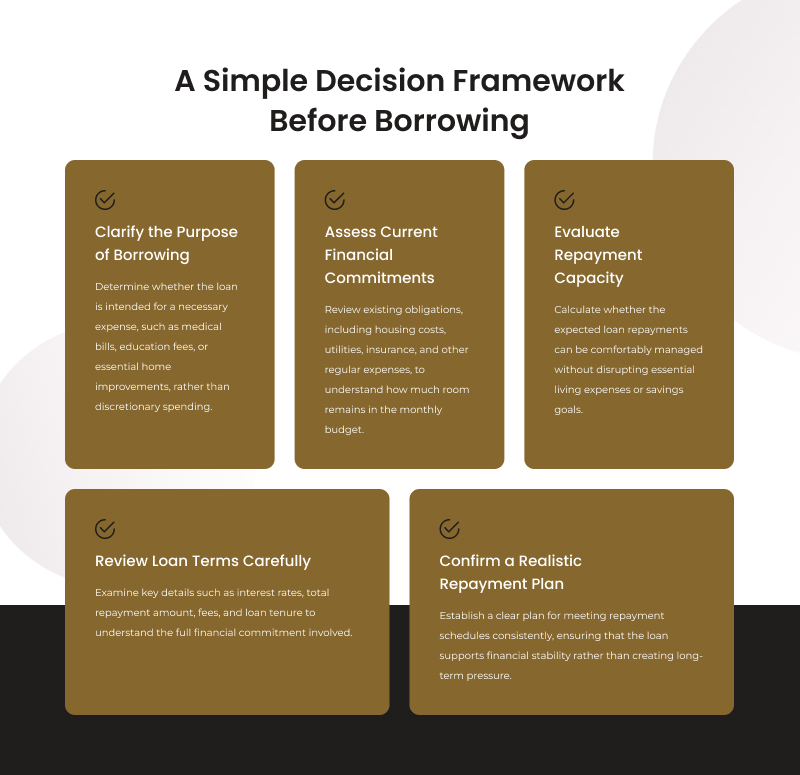
Responsible borrowing is an important part of a balanced financial mindset. Healthy financial behaviour does not require avoiding loans entirely. Instead, it involves understanding when borrowing may support meaningful goals and approaching it with careful consideration. When guided by strong money habits, borrowing can become a practical tool rather than a financial burden.
Smart borrowing begins with understanding the full cost of a loan. Many borrowers focus only on monthly repayment amounts, but it is equally important to consider total repayment value, interest rates, and loan tenure. Clear information allows individuals to evaluate whether the loan aligns with their financial situation and long-term plans.
Choosing a reliable lender is another key factor. In Singapore, borrowers are encouraged to work only with a licensed money lender that operates under the regulatory framework established by the Ministry of Law. These lenders must follow clear guidelines that protect borrowers through transparent loan terms and responsible lending practices.
For individuals who prefer convenience, some licensed money lenders also offer services through an online platform, allowing borrowers to submit applications or enquiries digitally while still receiving regulated lending services.
An example is 101 Credit Pte Ltd, which operates within Singapore’s regulated lending framework. As a licensed lender, the company emphasises transparency in loan terms, structured repayment plans, and customer-focused service that follows established regulatory guidelines. Borrowers are encouraged to review loan details carefully and seek clarification before committing to any financial agreement.
Responsible borrowing can also support positive financial outcomes when used strategically. For instance, individuals managing several high-interest obligations may consider a money lender offering a debt consolidation loan to combine repayments into a single, structured plan. When managed properly, this approach can simplify repayment schedules and support better financial organisation. Maintaining a balanced level of financial commitments is equally important, and individuals can benefit from understanding how to keep their repayment obligations at a manageable level in relation to their income.
Other examples of constructive borrowing include financing education, acquiring tools that improve productivity, or managing temporary financial gaps during important life events. In each case, thoughtful planning ensures that borrowing aligns with broader financial objectives.
Ultimately, strong money habits guide not only how individuals spend but also how they approach borrowing. When financial decisions are grounded in awareness, planning, and responsible choices, loans can serve as supportive financial tools rather than sources of long-term stress.
Questions You Might Ask
-
How do I know if I’m borrowing for the right reasons?
Ask yourself whether the loan supports long-term goals or only short-term comfort. Responsible borrowing should align with improving financial stability, not lifestyle pressure.
-
What’s the difference between emotional and logical borrowing?
Emotional borrowing is reactive, such as impulse shopping or spending after a stressful event. Logical borrowing involves researching available options, comparing interest rates, and planning repayments carefully before committing to a loan. Responsible lenders such as 101 Credit support this approach by encouraging borrowers to understand loan terms clearly before proceeding.
-
How can I make sure I’m not taking on too much debt?
Follow the guideline that total monthly debt repayments ideally stay within about one-third of income. If you’re uncertain, 101 Credit’s advisors can help you assess affordability before you apply.
-
Is borrowing from a licensed moneylender safer than from informal sources?
Absolutely. Licensed moneylenders like 101 Credit operate under strict regulations by Singapore’s Ministry of Law, ensuring transparent rates and fair terms, unlike illegal lenders who impose hidden or inflated charges.
-
How can I start improving my money habits today?
Begin by tracking your expenses, automating savings, and reading credible financial resources. Progress happens gradually, but consistency matters most.
Conclusion

Financial decisions are rarely shaped by a single moment. Instead, they develop through daily choices and patterns that influence how individuals save, spend, and borrow over time. Developing strong money habits enables individuals to make financial decisions with greater clarity and stability, especially in a fast-paced, high-cost environment like Singapore.
Borrowing itself is not inherently negative. When approached thoughtfully, it can serve as a practical financial tool that helps people manage important life events, bridge temporary financial gaps, or pursue opportunities that support personal progress. The key lies in understanding the purpose behind borrowing and ensuring that financial commitments remain manageable and aligned with long-term goals.
Achieving this balance requires both awareness and discipline. By recognising personal spending patterns, reflecting on financial priorities, and making informed decisions, individuals can strengthen the money habits that guide their overall financial wellbeing. Blending emotional awareness with logical planning encourages a more responsible and confident approach to managing money.
At 101 Credit Pte Ltd, financial empowerment begins with awareness. By understanding your financial motivations and building mindful habits around borrowing and spending, you can approach credit decisions with greater confidence and responsibility.
If you are considering financial support for a meaningful need, explore how 101 Credit’s transparent and ethical lending solutions can help you make smarter financial choices today.